Technical insights on engineering, motor advancements, and high-frequency consumer demand patterns.
1. Technological Advancements in Portable Pneumatics
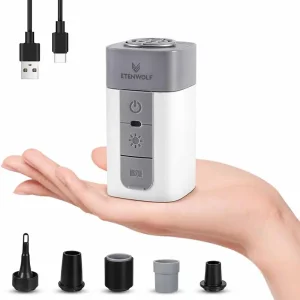
The consumer-grade home tire pump has evolved from a heavy, slow, oil-lubricated garage appliance into a lightweight, cordless, high-performance mechanical system. The transition is driven by three main factors: advancements in permanent-magnet motors, higher energy density lithium battery chemistry, and digital micro-controllers (MCU) governing flow regulation.
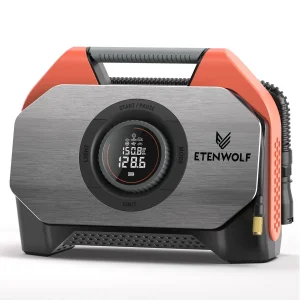
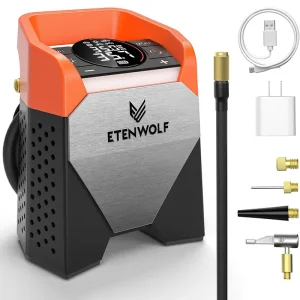
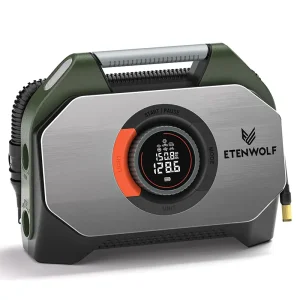
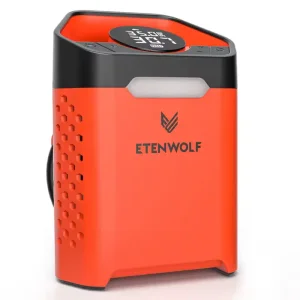
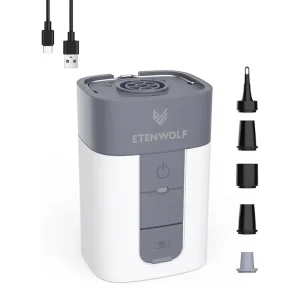
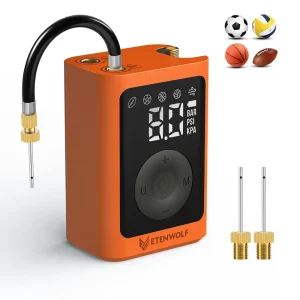
Traditional domestic tire pumps utilized brushed motor geometries, which suffered from high rotor heat, rapid brush wear, and limited continuous operating times (often under 5 minutes). Our flagship models, such as the ETENWOLF S7 (38,400mAh) and the ETENWOLF S6, incorporate modern brushless DC (BLDC) motors paired with optimized planetary gear assemblies. This combination provides up to 35% higher energy efficiency, allowing our inflators to maintain continuous duty-cycles of up to 30 minutes at 35 PSI. Additionally, the integrated cooling systems feature a micro-engineered, multi-blade fan that draws air across high-grade aluminum alloy cylinder sleeves to keep temperature increases within safe limits.
2. Macro-Level Procurement Dynamics: Why Dual Production Bases Matter
Global supply chains face challenges from geopolitical changes, ocean shipping delays, and shifting customs regimes. For procurement executives at retail chains or tier-1 automotive brands, selecting a supplier with single-country manufacturing exposes them to operational risks.
Recognizing this, Mozhen Technology invested in a dual-factory network. Our Shenzhen headquarters handles R&D, sophisticated PCB production, and high-precision injection tooling. Our 60,000-square-meter facility in Vietnam serves as a high-volume manufacturing center that exports directly to Europe and the Americas under favorable tariff rates. This configuration provides buyers with geographic redundancy, competitive component pricing, and reliable production capacity.
| Performance Parameters |
Consumer Entry-Level |
Mid-Tier Automotive |
Flagship Heavy-Duty (ETENWOLF S7) |
| Target Applications |
Bicycles, Sports Balls, Inflatables |
Sedans, Crossovers, SUVs |
Pickups, Commercial Trucks, Off-road 4x4s |
| Pressure Calibration Range |
3 - 120 PSI |
3 - 150 PSI |
3 - 200 PSI |
| Air Flow Volume (0 PSI) |
15 L/min to 20 L/min |
25 L/min to 32 L/min |
40 L/min to 50 L/min |
| Battery Cell Array |
3S1P (approx. 7.4V - 11.1V) |
3S2P (approx. 11.1V / 7800mAh) |
Dual-pack high-drain (38400mAh equivalent) |
| Thermal Cutoff Threshold |
60°C (NTC Sensor Trigger) |
75°C (NTC Sensor Trigger) |
85°C (Active Sensor Feedback Loop) |
3. Calibration Accuracy and Sensor Engineering
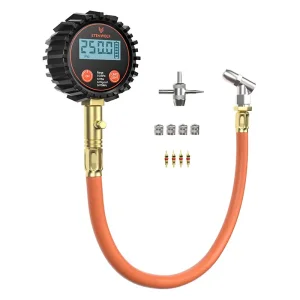
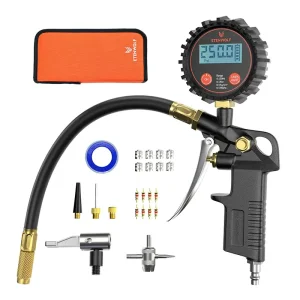
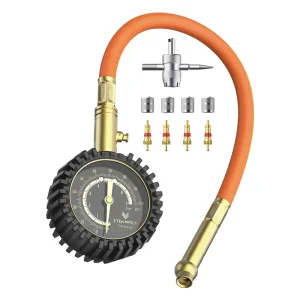
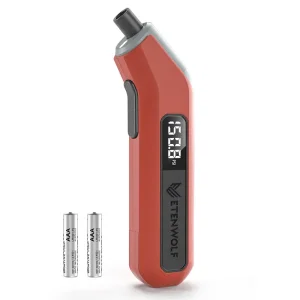
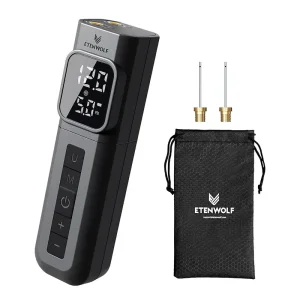
Accuracy in digital tire gauges is not just a convenience—it directly impacts vehicle safety, tire lifespan, and fuel efficiency. A deviance of even 2 PSI in commercial tire settings can accelerate tread wear by up to 15%. Our digital platforms, including the ETENWOLF T400, T500, and T300 series, feature high-resolution silicon pressure sensors. These gauges support measurements up to 200 PSI with a calibration accuracy of ±0.5 PSI. They use real-time analog-to-digital converters (ADC) that check tire pressure 100 times per second, cutting off the pump automatically once the target pressure is reached to prevent over-inflation.
 MOZEN
MOZEN