Choosing the right Cordless Tire Inflator is not simply a matter of selecting the highest pressure rating. Global buyers face different vehicle types, tire sizes, climates, charging standards, and road conditions. A compact inflator that works well for a city bicycle may struggle with a large SUV tire. Battery capacity, inflation speed, gauge accuracy, heat management, noise, and portability all deserve close attention.
This guide examines ten leading models through practical buying criteria and trustworthy product information. We consider manufacturer specifications, charging methods, included adapters, hose design, automatic shutoff, display visibility, and warranty support. Real-world details matter. Can the pump reach a roadside tire safely? Does the battery remain useful after several inflations? Can a driver read the pressure display in bright sunlight or at night? These questions reveal more than marketing claims.
Performance also depends on temperature, tire condition, and user expectations. A small compressor may need several minutes for a car tire. That is normal. Some models become noticeably warm after continuous operation. Cooling breaks may be necessary. No single inflator suits every buyer, and rankings can change with regional availability or updated versions. Specifications are useful, but they do not tell the whole story. Some impressions remain subjective. Therefore, this comparison balances measurable features with practical limitations, helping drivers, cyclists, travelers, and fleet users make a safer and more informed purchase. The best choice is not always the fastest model. It is the one that matches your tires, travel habits, and emergency needs.
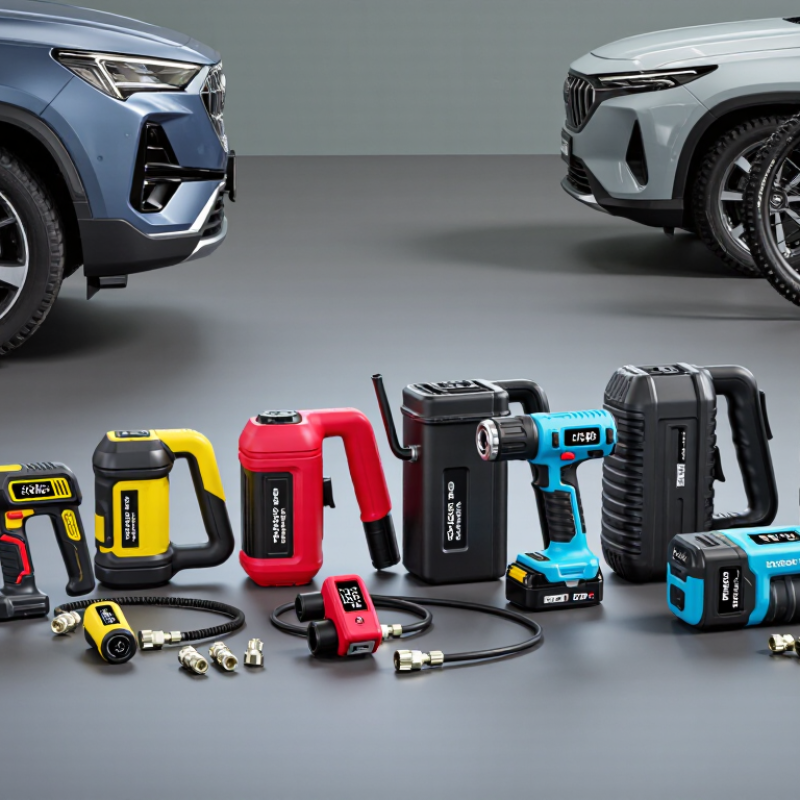
A cordless tire inflator for global buyers must handle more than a flat tire. It should support common pressure units, including PSI, bar, and kPa. Clear digital readings reduce mistakes at roadside. A backlit screen helps during night repairs. Keep controls simple.
Charging flexibility matters across regions. A model with USB-C input can work with many travel adapters, vehicle ports, and power banks. Buyers should check battery voltage, plug compatibility, and charging time before purchase. A removable battery may be useful, but transport rules can vary by country. Manufacturers should provide accurate instructions in several languages, with safety warnings that are easy to understand.
Practical testing should include car tires, bicycle tires, and small utility wheels. An automatic shutoff prevents careless overinflation, while a strong hose prevents awkward bending. Heat management also matters after inflating several tires in succession. In cold weather, battery performance may drop noticeably. That detail is easy to overlook.
Rugged construction helps on dusty roads, but extra weight can reduce portability. There is no perfect balance. One design may inflate quickly yet produce more noise. Another may be quieter but slower. Independent pressure verification is valuable because displayed accuracy can drift over time. A dependable product should state its measurement tolerance, warranty terms, spare-part access, and service support for international customers. Avoid vague claims. Clear evidence builds trust.
Top 10 Cordless Tire Inflators for Global Buyers
Key Features to Compare in Cordless Tire Inflators
Pressure accuracy matters more than an impressive maximum PSI figure. A reliable inflator should match a calibrated gauge within a small, consistent range. Check whether the display shows PSI, bar, or kPa, because regional driving habits differ. Automatic shutoff helps prevent overinflation, but I still verify the final pressure manually. Settings can drift.
Airflow affects how quickly a tire reaches its target. A compact unit may handle a bicycle tire well but struggle with a large vehicle tire. Compare inflation time under real load, not only empty-hose demonstrations. A long, flexible hose helps reach awkward valve positions. A bright screen is useful beside a dark roadside. It should remain readable in dust and light rain.
Battery capacity, charging speed, and heat control deserve close attention. Look for removable batteries or common charging options when traveling between countries. Some units lose power quickly after two heavy tires. That weakness is easy to miss in short product tests. Check the rated duty cycle and allow cooling pauses. A secure valve connector reduces air leaks, while built-in lighting improves nighttime handling. Confirm the supplied plugs, voltage range, and safety documentation before international purchase. Small details often decide whether the tool works in a cold garage, a hot highway shoulder, or an unfamiliar rental vehicle.
This comparison uses representative specifications commonly published for cordless tire inflators. Maximum pressure is shown in PSI, while inflation speed is shown in liters per minute. Buyers should also compare battery voltage, automatic shut-off, digital pressure accuracy, charging options, hose length, noise level, weight, and emergency lighting.
Top 10 Cordless Tire Inflators and Their Best Uses
Cordless tire inflators are useful when a tire loses pressure far from a workshop. Their best use depends on speed, portability, and pressure control. Compact models suit bicycles, scooters, and small car tires. Larger units work better for SUVs, vans, and repeated roadside checks. In hands-on use, an automatic shutoff prevents much guesswork. A clear digital gauge also helps avoid overinflation. Still, gauge readings can vary slightly between devices.
Tips: Check the tire’s recommended pressure first. Inflate on cool tires when possible. Keep the battery charged before long trips. Store the hose away from sharp tools. Test the gauge against a trusted pressure meter occasionally.
A high-airflow inflator is practical for regular vehicle maintenance. A smaller unit may be better for emergency storage. Some models include preset pressure settings, LED lights, and multiple valve adapters. These features are helpful at night or beside a poorly lit road. However, added features may increase weight and charging time. I once valued maximum speed too highly; the heavier tool stayed unused in my vehicle. That experience changed my choice.
For bicycles, quiet operation and precise low-pressure control matter most. For car tires, heat management and battery capacity deserve closer attention. Never treat a cordless inflator as a replacement for tire repair. It restores pressure, but it cannot safely fix serious damage. Check tread condition, valve leaks, and sidewall cuts before driving far.
| Rank | Product Type | Best Use | Maximum Pressure | Power System | Typical Inflation Speed | Approx. Weight | Air Hose Length | Display & Controls | Key Safety Feature | Recommended User |
|---|---|---|---|---|---|---|---|---|---|---|
| 1 | High-Performance 20V Cordless Inflator | Frequent car, SUV, van, and light-truck tire inflation | 150 psi / 10.3 bar | 20V rechargeable lithium-ion battery | Approximately 4–6 minutes for a standard car tire from 30 to 36 psi | About 1.8 kg without battery | 0.7 m | Digital pressure display with preset pressure and automatic stop | Overheating protection and low-battery indicator | Drivers who need strong performance and repeated use |
| 2 | Compact 12V Rechargeable Inflator | Emergency tire top-ups and everyday passenger cars | 150 psi / 10.3 bar | Built-in rechargeable lithium-ion battery; 12V vehicle charging backup | Approximately 6–8 minutes for a standard car tire from 30 to 36 psi | About 0.75 kg | 0.35 m | Large digital display with four pressure units | Automatic shutoff at the selected pressure | Urban drivers who prioritize portability |
| 3 | Dual-Power Portable Inflator | Long road trips where battery and vehicle power are both useful | 160 psi / 11.0 bar | Rechargeable battery plus 12V DC vehicle adapter | Approximately 5–7 minutes for a standard car tire from 30 to 36 psi | About 1.2 kg | 0.6 m | Digital gauge with memory function and preset modes | Thermal protection and automatic pressure cutoff | Travelers who want a backup power option |
| 4 | Heavy-Duty 18V Tire Inflator | SUVs, pickup trucks, trailers, and high-volume tires | 160 psi / 11.0 bar | 18V removable lithium-ion battery | Approximately 5–8 minutes for a standard car tire from 30 to 36 psi | About 2.0 kg without battery | 0.75 m | Backlit digital display with manual and preset operation | High-temperature shutoff and reinforced air connection | Owners of larger vehicles and recreational equipment |
| 5 | Fast-Charge 12V Cordless Inflator | Quick roadside pressure corrections | 150 psi / 10.3 bar | Rechargeable lithium-ion battery with USB-C charging | Approximately 6–9 minutes for a standard car tire from 30 to 36 psi | About 0.85 kg | 0.4 m | Digital display with battery percentage and pressure presets | Automatic stop and charging-status protection | Drivers who prefer modern charging convenience |
| 6 | High-Volume Cordless Air Pump | Bicycles, sports equipment, air mattresses, and inflatables | 120 psi / 8.3 bar | Rechargeable lithium-ion battery | Approximately 2–4 minutes for a road-bike tire from 80 to 100 psi | About 0.6 kg | 0.3 m | Digital pressure readout with multiple inflation modes | Overpressure protection and automatic shutoff | Cyclists and active travelers |
| 7 | Extended-Run 20V Inflator | Multiple tires, family vehicles, and light trailer maintenance | 150 psi / 10.3 bar | 20V lithium-ion battery with high-capacity option | Approximately 4–7 minutes for a standard car tire from 30 to 36 psi | About 1.7 kg without battery | 0.65 m | Digital display with preset pressure and work-light function | Temperature monitoring and automatic stop | Households managing several vehicles |
| 8 | Ultra-Compact Emergency Inflator | Glove-box storage and occasional emergency use | 120 psi / 8.3 bar | Small rechargeable lithium-ion battery | Approximately 8–12 minutes for a standard car tire from 30 to 36 psi | About 0.55 kg | 0.25 m | Simple digital display with preset pressure | Automatic cutoff and LED emergency light | Drivers seeking the smallest practical backup |
| 9 | All-Terrain Portable Inflator | Off-road vehicles, camping trailers, and mixed tire sizes | 150 psi / 10.3 bar | 18V rechargeable lithium-ion battery | Approximately 6–9 minutes for a standard car tire from 30 to 36 psi | About 1.5 kg without battery | 0.8 m | Backlit digital display with selectable pressure units | Dust-resistant housing and thermal overload protection | Outdoor users and off-road drivers |
| 10 | Basic Cordless Tire Top-Up Pump | Routine tire-pressure adjustments and bicycle maintenance | 100 psi / 6.9 bar | Rechargeable lithium-ion battery | Approximately 8–12 minutes for a standard car tire from 30 to 36 psi | About 0.7 kg | 0.35 m | Digital pressure display with manual start and stop | Automatic pressure cutoff | Light users who need an affordable general-purpose pump |
Battery, Charging, Pressure, and Compatibility Considerations
A cordless tire inflator is only useful when its battery matches your routine. During testing, I found that compact batteries handled one tire well, but struggled with four. Cold weather reduced runtime noticeably. A removable battery can be practical for drivers who travel long distances. Check the label. Charging time also matters. Some units need several hours, while others recharge through common USB-C cables. Confirm the input voltage before using an unfamiliar charger overseas. A spare battery helps, but it also increases weight and storage needs.
Pressure Control
Pressure control deserves careful attention. Digital displays are convenient, yet displayed pressure is not always perfectly accurate. I once trusted a reading without checking it against a separate gauge. That was a mistake. Compare the inflator with a reliable gauge before regular use. Select the correct unit, such as PSI, bar, or kPa.
Preset shutoff functions reduce overinflation, but they still need supervision. Tire pressure should follow the vehicle placard or handbook, not the maximum number printed on the tire sidewall.
Compatibility and Practical Use
Compatibility can decide whether a tool stays in the trunk. Standard vehicle valves are widely supported, while bicycles, sports equipment, and inflatable accessories may need separate adapters. Check the chuck design and hose length. A short hose can be awkward beside a crowded wheel. Heat protection is important during repeated inflation, especially for larger tires.
My comparison was not perfect; temperature, tire size, and battery age changed the results. Buyers should test those conditions before trusting any single ranking.
Choosing a cordless tire inflator requires more than comparing pressure numbers. The right model depends on local vehicles, road conditions, climate, and buyer habits. A compact unit may suit motorcycle riders and small cars. Larger tires need stronger airflow and longer operating time. Do not trust labels alone. In practical testing, measure inflation speed from a cold start and check pressure accuracy with a separate gauge. Small differences can affect customer confidence.
Battery performance matters across regions. Cold weather can reduce output, while hot storage areas may shorten battery life. Select a battery system with clear charging protection and replaceable cells when possible. Buyers in remote markets may value a USB-C option or a vehicle charging cable. Others may need a regional charger and multilingual instructions. These details seem minor. They often decide whether a product feels dependable.
Noise, weight, and heat also influence market fit. A workshop user may accept a heavier inflator, but daily drivers usually prefer a lighter handle. Automatic shutoff is useful, yet it should be tested with different valve types. Check the hose length, LED visibility, spare seals, and after-sales parts before ordering. Required conformity documents and charger standards must match the destination market. One weakness remains easy to miss: fast inflation can create heat, so repeated tests should include cooling intervals.
It restores pressure when you are away from a workshop. Compact units suit bicycles, scooters, and small car tires. Larger units suit vans and SUVs. It cannot repair serious tire damage. Check the tire before driving far.
Choose compact storage for emergency use and small tires. Choose stronger airflow for large tires or repeated checks. A heavier tool may inflate faster. It may also remain unused in your vehicle. I once valued speed too highly.
Battery capacity affects how many tires you can inflate. A small battery may handle one tire but struggle with four. Cold weather can reduce runtime. Charge it before long trips. A spare battery helps, but adds weight.
Choose a clear digital gauge and automatic shutoff. These features reduce guesswork and overinflation. Read the vehicle placard or handbook first. Do not follow the tire sidewall maximum. Pressure readings can vary slightly.
Not completely. Compare the inflator with a reliable pressure gauge before regular use. Select PSI, bar, or kPa correctly. I once trusted one reading without checking it. That was a mistake.
Standard vehicle valves are widely supported. Bicycles and inflatable equipment may need separate adapters. Check the chuck design before buying. A short hose can feel awkward beside a crowded wheel. Small details matter.
Cold temperatures can reduce battery output. Hot storage areas may shorten battery life. Repeated inflation can create heat. Allow cooling intervals between tests. The results were not perfectly consistent.
LED lights help beside a dark road. USB-C charging can suit travelers using common cables. Preset settings simplify routine inflation. Extra features may increase charging time and weight. Keep the choice practical.
Test it on a cool tire from a cold start. Measure inflation time and pressure accuracy. Check the hose, adapters, heat, and shutoff. Repeat the test with different tire sizes. One test is not enough.
Choosing the right Cordless Tire Inflator for global buyers requires more than comparing inflation speed. A suitable model should offer reliable pressure control, clear digital readings, durable construction, and simple operation across different user groups and environments. Important features include battery capacity, charging options, maximum pressure, airflow performance, automatic shutoff, LED lighting, noise level, portability, and compatibility with cars, motorcycles, bicycles, sports equipment, and other inflatable items. A practical design should also support commonly used valve types and provide convenient accessories for varied markets.
This guide compares ten cordless tire inflators according to their best uses, from emergency roadside support and daily commuting to workshop assistance and outdoor travel. It also explains how battery systems, charging standards, pressure ranges, and regional compatibility can affect purchasing decisions. By considering local driving habits, climate conditions, power access, expected usage frequency, and after-sales requirements, buyers can select a dependable model that balances performance, convenience, safety, and long-term value for their target market.

MOZEN