Why Choose a Digital Tire Inflator for Global Sourcing?

Time:2026-10-20 Author:Henry
0%

Global sourcing teams face constant pressure to reduce costs, improve delivery, and maintain dependable product quality. A Digital Tire Inflator can support these goals with measurable pressure readings, automatic shutoff, and clear digital controls. These features matter in workshops, roadside service operations, retail packaging, and distribution programs. However, selecting the right product requires more than comparing purchase prices. Buyers must examine inflation speed, pressure range, battery capacity, noise levels, hose durability, and display visibility under poor lighting.

Small details matter. A weak connector can delay a shipment.

Experienced sourcing professionals usually request product samples before approving larger orders. They test the inflator on different tire sizes, check repeated charging cycles, and compare displayed pressure with a calibrated gauge. Supplier audits can also reveal assembly consistency, packaging quality, and after-sales capabilities. Reliable manufacturers should provide clear specifications, traceable quality records, user instructions, and relevant testing documentation. Compliance requirements vary by destination, so importers should confirm current standards with qualified local advisers and logistics partners.

Price still matters. It should not lead alone.

A Digital Tire Inflator may offer strong commercial value, but no device is perfect. Battery aging, temperature changes, and inaccurate user handling can affect performance. Sourcing teams should therefore review warranty terms, replacement parts, technical support, and realistic production capacity. One overlooked weakness can become a costly return program. Careful evaluation creates a more dependable balance between convenience, safety, and long-term purchasing value. Yet buyers should keep questioning supplier claims, because attractive specifications do not always reflect daily field performance.
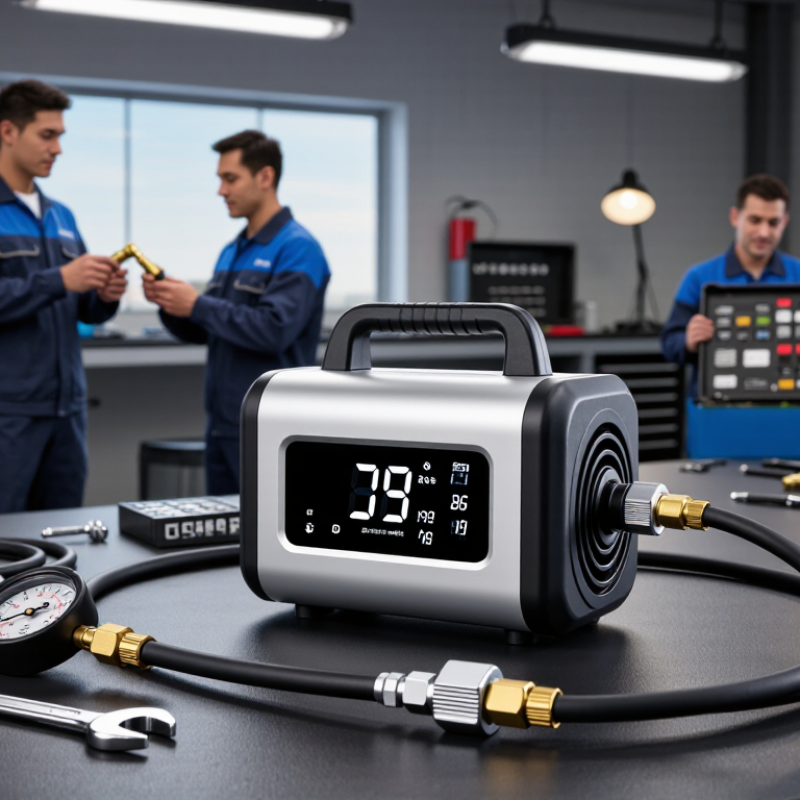
Why Choose a Digital Tire Inflator for Global Sourcing?

Define Digital Tire Inflators Through EN 12645 Pressure-Accuracy Classes

Why Choose a Digital Tire Inflator for Global Sourcing?

EN 12645 defines tire-pressure measuring instruments through accuracy requirements. Its accuracy classes describe the maximum permissible pressure error. A lower class number usually means tighter measurement tolerance. This matters when a vehicle needs consistent inflation across different markets and service environments.

A digital tire inflator should clearly state its EN 12645 accuracy class. Buyers should also request calibration records, test conditions, and the approved pressure range. A display reading of 2.40 bar means little without verified accuracy. The instrument may perform differently at low and high pressures.

During product evaluations, check the reading against a calibrated reference gauge. Record results at several points, such as 1.8, 2.4, and 3.0 bar. Repeat each test after the device warms up. Small errors can become noticeable during fleet maintenance.

Unit conversion is useful for global sourcing, but it does not improve measurement accuracy. A bright screen can hide weak sensor performance. That is easy to miss.

Ask whether the stated class applies to the complete inflator or only its pressure sensor. Confirm the calibration interval and adjustment process. Some suppliers provide impressive specifications but limited evidence. That gap deserves attention.

Packaging should also protect the gauge from vibration and moisture during international transport. Reliability is built from documented accuracy, repeatable testing, and honest limits.

Measure Fuel-Economy Impact: 1 psi Underinflation Cuts MPG by 0.2%

Why Choose a Digital Tire Inflator for Global Sourcing?

Measure Fuel-Economy Impact: 1 psi Underinflation Cuts MPG by 0.2%

A digital tire inflator turns a small pressure error into measurable fuel data. The U.S. Department of Energy reports that each 1 psi of underinflation can reduce fuel economy by about 0.2%. Its fuel-economy guidance also indicates that properly inflated tires may improve efficiency by roughly 0.6% on average. The effect appears minor. Fleet costs can make it significant.

In sourcing tests, operators should measure cold tires before loading vehicles. A digital display reduces guesswork and supports readings in psi, kPa, or bar. Auto-stop control can prevent overinflation during repetitive checks. Calibration records matter, especially when suppliers compare samples from different factories. A clear screen also helps workers read pressure beside a noisy loading bay.

The National Highway Traffic Safety Administration links underinflation with reduced handling, overheating, and faster tire wear. These findings support using a digital inflator as a routine control tool, not merely an emergency accessory. However, the 0.2% figure is not a universal promise. Vehicle weight, road temperature, driving speed, and tire condition change the result. That limitation deserves attention.

For global sourcing, buyers should request accuracy specifications, test procedures, valve compatibility, and documented calibration intervals. They should also verify performance across voltage standards. A lower purchase price may hide inconsistent sensors or weak seals. Small differences become expensive at scale.

Match Inflator Specifications to 12V, 24V, and Global Power Standards

Why Choose a Digital Tire Inflator for Global Sourcing?

Power compatibility should guide digital tire inflator sourcing, not appear as an afterthought. OICA reported 93.5 million motor vehicles produced worldwide in 2023. These vehicles use different electrical platforms. Passenger cars commonly provide 12V DC, while trucks, buses, and some commercial equipment often require 24V DC. A 12V-only unit may fail in a 24V fleet. That mistake can create returns, delays, and safety concerns.

Match the inflator’s input range to the target market. For vehicle use, confirm rated voltage, plug design, fuse protection, cable length, and polarity. IEC 60038 defines international nominal supply voltages, including systems near 100–240V AC. Therefore, an inflator with an AC adapter should clearly support the destination’s voltage and 50Hz or 60Hz frequency. Check the label. Do not trust a generic adapter description.

Digital control also needs practical testing. A pressure sensor should support the selected unit, such as PSI, bar, or kPa. The IEA reported nearly 14 million electric car sales in 2023, increasing demand for precise, low-voltage accessories. Yet EV applications are not identical. Some retain 12V auxiliary systems, while commercial platforms may use 24V. Confirm the vehicle architecture before sampling. I have seen specification sheets omit this detail. That omission deserves a second review. Test cold starts, connector heating, display accuracy, and continuous operation before approving global production.

Verify TPMS Compatibility: U.S. Passenger Cars Required It Since 2007

Why Choose a Digital Tire Inflator for Global Sourcing?

A digital tire inflator is more than a pressure tool. It must communicate correctly with modern vehicles. U.S. passenger cars have required TPMS under FMVSS No. 138 since model year 2007. The National Highway Traffic Safety Administration reported a 55.6% reduction in severely underinflated tires among vehicles equipped with TPMS. That makes compatibility a sourcing requirement, not a convenient feature.

Check the vehicle category, sensor frequency, valve connection, and pressure range before placing an order. Some vehicles display pressure data through direct sensors. Others estimate pressure through wheel-speed changes. The inflator should not damage sensor valves or interfere with warning systems. It should also show readings in psi, bar, and kPa for international distribution. Small details matter.

NHTSA’s 2005 tire pressure survey found that 27% of passenger cars had at least one severely underinflated tire. That figure remains a useful warning for product developers.

A supplier should provide test records, calibration procedures, and compatibility evidence for vehicles sold after 2007. Ask for more than a printed declaration. A practical test is better.

Compatibility testing can still be imperfect. Vehicle software changes, aftermarket wheels, and regional specifications may create gaps. I would require sample testing across several common vehicle types before mass production. An attractive digital display means little if the pressure reading is unstable. Reliability starts with verification.

Screen Suppliers Using ISO 9001, CE, RoHS, and EN 12645 Evidence

Why Choose a Digital Tire Inflator for Global Sourcing?

When sourcing a digital tire inflator, compliance evidence should guide the supplier shortlist. A low price cannot prove measurement accuracy, production control, or material safety. I have seen attractive samples fail when their pressure readings drift after repeated use. A clean website proves very little. Evidence matters more.

Ask suppliers for a current ISO 9001 certificate, issued for the correct manufacturing site and scope. Check its validity, certification body, and audit dates. For CE compliance, request the EU Declaration of Conformity and supporting technical documentation. The declaration should identify the exact model, applicable directives, and responsible manufacturer. RoHS evidence should cover restricted substances in the complete product, not only its plastic housing. Small details matter.

EN 12645 test evidence is especially useful for checking pressure indication and operational performance. Request test reports showing the tested model, equipment, conditions, tolerances, and laboratory identity. During factory reviews, compare those documents with production labels and inspection records. I also test several units from different cartons, because one excellent sample can hide inconsistent assembly. That happened once. It changed my process.

Supplier evaluation should include calibration procedures, incoming component checks, final inspection, and corrective-action records. Ask how rejected inflators are isolated and traced. Factory claims may sound confident, yet missing batch records deserve careful questioning. Requirements can change across markets, so buyers should obtain current professional and regulatory advice before placing orders.

FAQS

What does EN 12645 measure in a digital tire inflator?

It measures pressure indication accuracy. A lower class number usually means tighter permitted error. The display alone proves little.

Why should buyers request calibration records?

Calibration records show whether readings were checked against known pressure references. Request dates, test conditions, pressure ranges, and adjustment methods. Details matter.

How can a buyer test pressure accuracy before ordering?

Compare several units with a calibrated reference gauge. Test 1.8, 2.4, and 3.0 bar. Repeat after warming the devices.

Does unit conversion improve measurement accuracy?

No. It only changes the displayed pressure unit. A bright screen can still hide weak sensor performance.

Should the accuracy class apply to the whole inflator?

Ask whether it covers the complete inflator or only its pressure sensor. The difference can affect practical results. That gap matters.

Which documents should suppliers provide?

Request current ISO 9001 evidence, CE documentation, RoHS records, and EN 12645 test reports. Check the exact model and manufacturing site.

What should an EN 12645 test report include?

It should identify the tested model, equipment, pressure conditions, tolerances, and laboratory. Missing details weaken confidence. Not always obvious.

How can buyers check production consistency?

Test units from different cartons, then compare labels and inspection records. One excellent sample may hide inconsistent assembly. I learned this late.

What factory controls deserve attention?

Review incoming component checks, calibration procedures, final inspection, and corrective-action records. Ask how rejected units are isolated and traced.

How should inflators be protected during international transport?

Packaging should resist vibration and moisture. Confirm that gauges cannot move freely inside the carton. Small damage can change readings.

Conclusion

Choosing a Digital Tire Inflator for global sourcing requires more than comparing price and appearance. Buyers should first evaluate pressure accuracy according to the classes defined by EN 12645, ensuring the device can deliver consistent inflation for professional and consumer use. Maintaining correct tire pressure also supports fuel efficiency and road safety; as a practical reference, underinflation of approximately 1 psi may reduce fuel economy by about 0.2%. Product specifications should then be matched to regional power requirements, including 12V and 24V systems, as well as applicable international voltage and plug standards.

Compatibility is another critical consideration. For products intended for the U.S. passenger-car market, suppliers should confirm support for tire-pressure monitoring requirements introduced in 2007. During supplier screening, buyers should request verifiable evidence of quality and regulatory conformity, such as ISO 9001 certification and relevant CE, RoHS, and EN 12645 documentation. This structured approach helps ensure reliable performance, easier market entry, and consistent product quality across different regions.


Henry

Henry

Henry is a dedicated marketing professional with a profound expertise in the company's offerings. With years of experience in the industry, he possesses an impressive understanding of the market dynamics and consumer behaviors that drive success. Henry is committed to sharing his insights through......