Choosing a Portable Tire Inflator in 2026 requires more than comparing advertised air pressure. A reliable model should match your vehicle, driving habits, and emergency needs. A compact pump can restore pressure beside a supermarket or on a dark roadside. However, its usefulness depends on accuracy, speed, battery life, and safe operation.
During practical testing, check whether the inflator reaches the vehicle manufacturer’s recommended pressure consistently. Compare its digital reading with a trusted handheld gauge. Small differences matter. A pump claiming 150 PSI may inflate slowly when attached to a large SUV tire. Look for measured inflation times, not only impressive packaging claims. A built-in light, automatic shutoff, flexible hose, and clear display can also reduce stress during nighttime use.
This guide explains how to choose a Portable Tire Inflator for commuting, road trips, motorcycles, bicycles, and occasional household tasks. It examines battery capacity, corded power options, noise, heat management, valve compatibility, and warranty support. Some recommendations may not suit every driver. That is worth admitting. My own preference has changed after using compact models that became hot quickly and lost charge in storage. The best choice is not always the smallest or cheapest one. It is the inflator that performs predictably when pressure drops, weather worsens, and time becomes limited. Check the manual, follow the correct tire pressure, and treat emergency equipment as something to test before you need it.
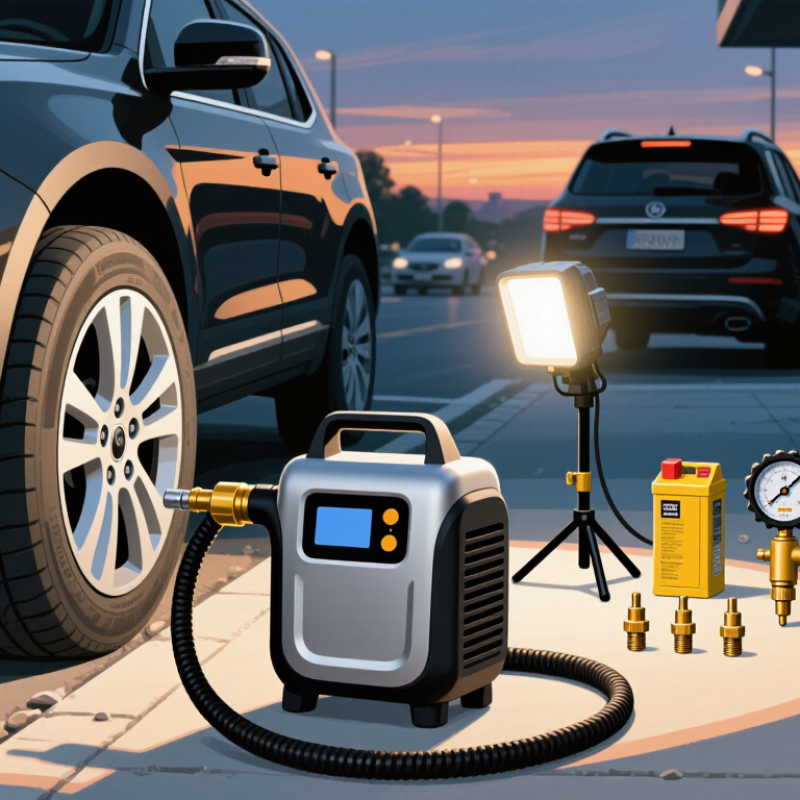
Before choosing a portable tire inflator, identify your vehicle’s actual inflation requirements. Check the driver’s door placard, not only the tire sidewall. The placard usually lists recommended cold-tire pressure for front and rear tires. A temporary spare may require a different pressure. Write these numbers down.
Pressure matters most.
Measure tires when they are cold, ideally before driving. Heat raises pressure and can produce misleading readings. Your inflator should reach the required pressure comfortably, with extra capacity for larger tires or seasonal changes. A clear digital gauge, automatic shutoff, and a long power cable make roadside use easier. Check whether your vehicle uses a 12-volt socket, rechargeable battery, or another approved power source.
I once assumed that a higher maximum pressure meant a better inflator. That was a poor shortcut. Air delivery speed, duty cycle, and gauge accuracy can matter more in real use. A compact unit may handle a small car well but struggle with a heavy vehicle’s larger tires. Follow the manufacturer’s cooling instructions, because continuous operation can overheat the motor. Test the inflator at home, using a separate pressure gauge for comparison. Small differences deserve attention. Inspect the hose, connector, and cable before every trip. If the reading seems unusual, stop and investigate instead of adding air blindly. A puncture, damaged valve, or uneven wear requires professional inspection, not repeated inflation.
The chart shows representative cold tire-pressure ranges commonly found on vehicle tire placards. Passenger cars often require about 30–36 psi, while SUVs, pickups, and electric vehicles may require higher pressures. Choose a portable inflator that can exceed your vehicle’s highest recommended pressure and includes a clear digital pressure display. Always follow the exact pressure listed on the driver-door placard or in the owner’s manual.
How to Choose a Portable Tire Inflator in 2026?
Choosing an inflator starts with its power source, not its advertising claims. A 12-volt corded model usually delivers steady output from a vehicle socket. Battery-powered models are cleaner to carry, but cold temperatures can reduce battery performance. Hand pumps need no battery, though they require more effort and time. That matters.
NHTSA’s Tire Pressure Monitoring System effectiveness study reported a 55.6% reduction in severely underinflated tires when monitoring systems were present. However, an inflator still needs an accurate pressure gauge. Select a model with a readable digital display, automatic shutoff, and pressure settings suited to your vehicle. The U.S. Department of Energy’s fueleconomy.gov guidance states that each 1 psi of underinflation can reduce fuel economy by about 0.2%. Small pressure errors can become expensive.
Portability is more than weight. Check hose length, cable storage, battery charging options, and heat protection during repeated use. A compact unit may fit neatly under a seat but struggle with large tires. I once preferred the lightest option and regretted its short cable beside a roadside shoulder. That choice was convenient, not practical. Industry testing data from the Consumer Technology Association also emphasizes battery capacity, charging reliability, and thermal safety in portable electronics. Those factors deserve attention here, even though tire inflators are often treated as simple tools. Read the pressure range carefully. Avoid trusting one impressive speed figure.
| Inflator Type | Power Source | Typical Maximum Pressure | Typical Airflow | Typical Inflation Speed | Portability | Best Use | Main Limitation |
|---|---|---|---|---|---|---|---|
| Cordless Battery Inflator | Rechargeable lithium-ion battery | 100–160 psi | 15–35 L/min | About 4–8 minutes for a typical car tire from 30 to 35 psi | Excellent; usually 1–2 kg | Emergency roadside use, bicycles, motorcycles, and occasional car-tire top-ups | Limited runtime; charging is required and performance drops in cold conditions |
| 12-Volt DC Plug-In Inflator | Vehicle 12-volt accessory socket or battery clips | 100–150 psi | 25–45 L/min | About 3–7 minutes for a typical car tire from 30 to 35 psi | Good; usually 1–2.5 kg, with a long cable | Repeated car-tire inflation and longer roadside sessions | Requires access to a vehicle battery or powered socket; cable storage can be bulky |
| Corded AC Inflator | Household AC outlet | 100–160 psi | 25–50 L/min | About 2–6 minutes for a typical car tire from 30 to 35 psi | Moderate; usually 1.5–3 kg | Home garages, workshops, and frequent inflation near an electrical outlet | Not practical for roadside use without a suitable power source |
| Dual-Power Inflator | Rechargeable battery plus 12-volt DC or AC input | 100–160 psi | 20–45 L/min | About 3–7 minutes for a typical car tire from 30 to 35 psi | Good; usually 1.5–3 kg | Users who want battery convenience with a backup power option | Higher purchase price and added weight compared with single-power models |
| Foot-Operated Manual Pump | Human power | Usually 100–160 psi on the gauge | Approximately 1–3 L per stroke | About 5–15 minutes for a typical car tire, depending on user effort | Excellent; usually 1–2 kg | Backup inflation, bicycles, and situations without electricity | Slower and physically demanding, especially for large vehicle tires |
| Hand Pump | Human power | 80–120 psi on the gauge | Approximately 0.3–1 L per stroke | About 8–20 minutes for a typical car tire; faster for bicycles | Very good; usually 0.3–1 kg | Bicycles, sports equipment, and lightweight emergency kits | Least efficient choice for car tires and high-volume inflatables |
Airflow, pressure range, and inflation speed matter more than a flashy maximum-pressure number. Airflow is usually listed in liters per minute or cubic feet per minute. Check whether the figure is measured without resistance. A 40 L/min rating may fall sharply when attached to a tire. For normal passenger cars, a useful inflator should handle roughly 30–36 psi without struggling.
NHTSA reports that about 26% of passenger vehicles have at least one significantly underinflated tire. I once trusted the sidewall number. That was a mistake.
Pressure accuracy is equally important. The correct target comes from the vehicle’s door label, not the tire’s maximum rating. Look for a digital gauge with small increments, automatic shutoff, and stable readings near everyday pressures.
The U.S. Department of Energy states that proper tire inflation can improve fuel economy by up to 3%. Small errors matter over many months.
Inflation speed should be tested under realistic conditions. Measure the time needed to raise a cold tire from 30 to 36 psi. Do not rely only on advertised “minutes.” Battery temperature, hose length, and valve fit can change results.
A longer hose is practical. It can also reduce airflow. The ideal unit balances speed with a usable duty cycle, because a fast motor may overheat after one tire.
My second mistake was ignoring cooldown time. Four tires exposed that weakness quickly.
How to Choose a Portable Tire Inflator in 2026?
Accuracy should guide your decision, not maximum pressure claims. A reliable inflator should measure within a small tolerance, ideally verified against a separate, trusted gauge. Test it on a cool tire and compare the reading before adding air. Readings may change during operation because heat affects pressure. Use the vehicle’s recommended pressure, usually printed inside the driver’s door. I once trusted an inflator’s screen without checking it. That assumption was wrong.
Controls matter when you are beside a dark roadside. Choose clear buttons, a readable display, and simple pressure-unit selection. Preset pressure is useful, but manual adjustment should remain available. Large controls work better with cold or gloved hands. The hose should reach the valve without twisting sharply. A locking connector can prevent air leaks. Keep the process simple.
Battery life needs practical testing. An inflator may fill several tires in mild weather but weaken quickly in freezing conditions. Check its rated operating time and required charging method. A removable battery is convenient, but only if replacements remain available. Safety features deserve equal attention. Automatic shutoff prevents overinflation, while thermal protection reduces overheating risk. Look for a visible low-battery warning and a stable base. Small details matter. Also, allow the unit to cool between tires, even when the manual seems optimistic.
Your driving habits should guide the purchase more than flashy specifications. A city commuter may need a compact inflator for slow leaks and monthly pressure checks. Choose a model with a clear digital gauge, automatic shutoff, and a twelve-volt vehicle plug. It should reach your car’s recommended pressure without overheating. Keep it in the trunk, not buried under luggage.
Frequent highway drivers need stronger airflow and a longer duty cycle. A cordless model offers convenience during roadside stops, but its battery can weaken in cold weather. Check charging time, battery capacity, hose length, and the included valve adapters. For SUVs or trailers, compare the required PSI with the inflator’s tested maximum. A high maximum number alone proves little. Real performance depends on airflow.
Budget matters, but the cheapest option may become expensive after one failure. I once focused on size and ignored heat buildup. That was a poor choice during a long inflation job. Look for overload protection, a stable base, and a gauge you can read at night. Test the unit at home before an emergency. Check your tire pressure with a separate gauge occasionally. Built-in displays can drift. Small errors matter. A basic, reliable inflator is often enough for regular commuters, while demanding drivers may justify a stronger battery model and a longer warranty.
Choose an inflator with a small measurement tolerance. Compare its reading with a separate, trusted gauge. Test the tire while it is cool. I once trusted a screen without checking it. That was a mistake.
Follow the vehicle’s recommended pressure, usually shown inside the driver’s door. Do not rely only on the inflator’s maximum-pressure claim. Heat can change readings during operation. Check again after the unit cools.
Choose large buttons, a readable display, and simple pressure-unit selection. Manual adjustment should remain available beside preset settings. Gloved hands need clear controls. Keep it simple.
The hose should reach the valve without sharp twisting. A locking connector can reduce air leaks. A stable connection makes inflation easier beside a dark roadside. Small details matter.
Check the rated operating time, charging method, and battery capacity. Cold weather can reduce cordless performance. A removable battery helps only when replacements remain available. Test it in realistic conditions.
Automatic shutoff helps prevent overinflation. Thermal protection reduces overheating risk during longer jobs. A low-battery warning and stable base are also useful. Let the unit cool between tires.
A compact model may handle monthly checks and slow leaks. Look for a clear digital gauge and automatic shutoff. A twelve-volt vehicle plug can be practical. Keep it in the trunk, not under luggage.
Choose stronger airflow and a longer duty cycle. Compare hose length, charging time, battery capacity, and valve adapters. Cold weather may weaken cordless operation. Maximum pressure alone proves little.
Compare the required pressure with tested performance, not advertised maximum pressure. Larger tires usually demand more airflow and longer operating time. Allow cooling breaks during repeated inflation. I once ignored heat buildup. That choice was poor.
Test the unit at home before an emergency. Check pressure with a separate gauge from time to time. Look for overload protection, a stable base, and a readable night display. The cheapest option may fail early.
Choosing the right Portable Tire Inflator in 2026 starts with understanding your vehicle’s tire size, recommended pressure, and everyday driving needs. Consider whether you need a compact cordless model for emergencies, a plug-in unit for regular maintenance, or a versatile option with multiple power sources. Compare airflow, maximum pressure, and inflation speed to ensure the inflator can handle your vehicle efficiently, especially for larger tires or frequent use.
Accuracy and ease of operation are equally important. Look for a clear digital display, simple controls, automatic shutoff, a durable hose, and useful safety protections against overheating or overloading. Battery capacity and charging time should match how often you drive and whether you travel long distances. Finally, balance performance, portability, and price. A dependable inflator for occasional roadside use may require fewer features, while frequent drivers may benefit from faster inflation, stronger construction, and longer battery life.

MOZEN