Choosing the best Automatic Balloon Pump for wholesale requires more than comparing unit prices. Wholesale buyers need consistent output, reliable motors, safe operation, and practical after-sales support. A pump that inflates 1,000 balloons at an event may still fail during a week of continuous production.
Industry reports support this growing demand. Grand View Research’s party supplies market analysis highlights stronger spending on celebrations, decorations, and event experiences. Fortune Business Insights also identifies customized parties and professional event services as important market drivers. These reports do not measure balloon pumps directly, but they show why efficient decorating tools matter to retailers, rental companies, and balloon artists. Market estimates can differ, however. That is worth remembering.
For wholesale evaluation, test the pump with standard latex balloons and larger foil designs. Check inflation speed, airflow stability, nozzle compatibility, operating noise, and motor temperature after repeated use. A dual-nozzle model can improve productivity when two workers share one station. A foot pedal may also reduce hand fatigue during long setup sessions. Safety markings, voltage compatibility, plug standards, and verified certifications should be confirmed before importing or reselling equipment. Do not rely only on supplier photographs.
A strong Automatic Balloon Pump should balance speed, durability, portability, and total ownership cost. Warranty terms matter. Replacement nozzles matter too. The cheapest model may create more returns, delays, and customer complaints. For dependable wholesale purchasing, request samples, review test records, inspect packaging, and compare real operating performance. No pump is perfect for every buyer, but disciplined testing can reveal the best fit.
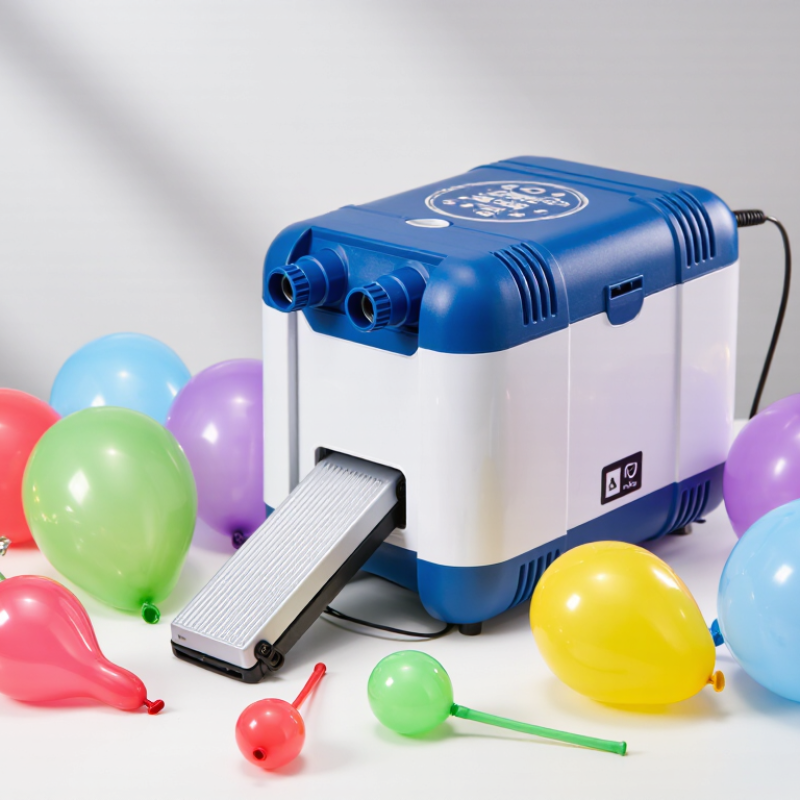
An automatic balloon pump is a compact electric machine that moves air through a nozzle. Most models use a motor, fan, intake filter, and pressure-controlled outlet. When the balloon neck covers the nozzle, airflow begins. Some units use a foot pedal or touch sensor. Others run through a timed switch.
The process is simple. Air enters through the rear vents, passes the motor, and exits through the nozzle. The operator stretches the balloon neck over the tip. The pump then fills it within seconds. A pressure limiter helps prevent splitting, but it does not replace careful handling. Thin latex can still burst. Not quite effortless.
Grand View Research estimated the global balloons market at about USD 1.9 billion in 2023. Its 2024 industry analysis also projects continued growth through 2030. This demand makes speed important for wholesalers, decorators, and event suppliers. However, speed alone is a poor buying standard. I would test noise, heat buildup, nozzle fit, and repeated-use performance before ordering cartons.
For wholesale use, select a pump with a stable motor, replaceable filters, insulated housing, and a clear duty cycle. Check whether it supports latex and foil balloons. A two-nozzle design can improve workflow, but only if both outlets maintain steady pressure. The IEC 60335-1 safety framework is also a useful reference for household electrical appliances. Certification details still need verification from the supplier. That step is often missed.
When choosing the best automatic balloon pump for wholesale, speed is only one part of the decision. A reliable machine should inflate common balloon sizes evenly without overheating during repeated use. Check its airflow rate, motor strength, and duty cycle. A pump that works for ten minutes may fail during a busy event.
Noisy equipment becomes tiring quickly. Look for a model with manageable sound, stable feet, and a heat-resistant housing. Dual inflation nozzles can improve packing efficiency, especially when staff prepare balloon orders in batches. Adjustable airflow matters too. Strong pressure may damage thin latex, while weak airflow wastes time. Automatic shutoff is useful, but test its response before placing a large order.
Safety and service details deserve equal attention. Choose electrical specifications suitable for the intended market, with clear instructions and replaceable fuses or filters. A long cable, simple switch, and easy-clean air inlet can prevent small daily frustrations. Ask for production samples, inspection records, and spare-part availability. A written warranty is more reliable than a sales promise.
I once focused too heavily on maximum speed. The faster pump also produced more noise and required frequent cooling. That was a poor trade-off. Wholesale buyers should compare ten-minute performance, not just the first inflated balloon. Packaging quality, carton protection, and consistent quality across samples also reveal how dependable the supplier may be. One test is never enough.
What Is the Best Automatic Balloon Pump for Wholesale?
How to Compare Automatic Balloon Pump Types for Bulk Buying?
Choosing an automatic balloon pump for wholesale requires more than comparing prices. Electric air pumps usually offer fast inflation, while dual-nozzle models can improve workflow during event preparation. Compare airflow, inflation speed, operating noise, and continuous-use limits. A pump that fills one balloon quickly may overheat during a busy afternoon. Check the motor’s cooling design and recommended duty cycle.
No single type suits every buyer. Compact pumps save storage space, but their smaller motors may struggle with repeated use. Larger pumps often provide stronger airflow, yet they can be heavier and louder. Test several samples with common balloon sizes before placing a bulk order. Measure the time needed to inflate ten balloons, not just one. Also inspect nozzle fit, cord length, switch quality, voltage compatibility, and replacement-part availability. Small details matter.
Tips: Request sample units and written specifications. Confirm packaging strength before shipment. Ask whether the supplier provides inspection records or safety documentation. A practical trial may reveal uneven airflow or heating that product photos hide. We once underestimated noise during indoor setup; that mistake affected staff comfort. Keep a small allowance for returns, damaged units, and changing customer needs. Reliable purchasing means checking performance, documentation, and after-sales support together.
What Is the Best Automatic Balloon Pump for Wholesale?
Choosing the best automatic balloon pump for wholesale starts with supplier evaluation, not the lowest quoted price. Ask for clear specifications, including inflation speed, motor rating, noise level, plug type, and carton dimensions. Request recent test records and a sample unit before placing a large order. A sample reveals details brochures often hide. Check whether the pump fills balloons evenly and stops without overheating during repeated use. In my purchasing checks, loose switches and short cords caused more trouble than expected. Small defects become expensive at wholesale volume.
Safety needs practical evidence. Look for insulated housing, stable feet, protected vents, and overload or thermal protection. The supplier should explain inspection procedures, production controls, and batch traceability. Ask how failed units are separated and replaced. Do not accept vague claims such as “high quality” without measurable criteria. Test the pump for thirty minutes, then inspect its casing, cable, and air outlet. This is not laboratory certification, but it can expose careless assembly. Request applicable compliance documents for your destination market.
Compare landed cost, not unit price alone. Include packaging, spare parts, shipping, import charges, payment terms, warranty support, and expected defect rates. A cheaper quote may hide thin cartons or weak after-sales service. Request tiered pricing at realistic quantities. Confirm whether prices change with custom packaging. Reliable suppliers answer consistently and document changes. One uncomfortable question matters: what happens when five percent of a shipment fails? If the answer is unclear, the price is not yet trustworthy.
How to Evaluate Supplier Quality, Safety, and Pricing
This procurement scorecard gives the highest weight to product safety and inflation performance, followed by quality consistency, pricing transparency, and delivery reliability. Buyers can adjust the weighting to match their wholesale requirements.
Wholesale buyers should judge an automatic balloon pump by workflow, not headline speed. Grand View Research’s 2023 Party Supplies Market report projects an 8.7% compound annual growth rate through 2030. That growth increases pressure on suppliers to deliver consistent output during seasonal demand. A suitable pump should inflate common balloon sizes evenly, support repeated use, and include replaceable nozzles.
Check its cycle time with a stopwatch. Then test ten balloons, not just one.
Noise and packing efficiency also matter. IMARC Group’s 2024 Party Supplies Market report estimates continued global expansion, with online and event-related sales supporting demand. Compact equipment can reduce carton volume and storage costs. Measure the pump, power cord, and accessories together.
A higher wattage looks impressive, but it may create unnecessary noise or heat. Not always better.
Wholesale purchasers should request voltage compatibility, thermal protection, duty-cycle information, and a written warranty. Ask for spare-part availability before placing a large order.
That detail is often overlooked.
A practical trial should run the pump for several short sessions, allowing cooling periods. Record inflation consistency, casing temperature, and operator comfort. The International Organization for Standardization emphasizes documented quality controls for consistent production processes, which applies to equipment evaluation as well. One weakness remains: supplier test data may use ideal conditions. Independent sampling is safer. Choose the model that performs reliably in your real packing room, not the one with the most attractive specification sheet.
It is a compact electric machine that pushes air through a nozzle. A motor and fan create the airflow. The operator stretches a balloon neck over the nozzle. Most balloons fill within seconds.
Air enters through rear vents, passes the motor, and exits through the nozzle. Some models use a foot pedal, touch sensor, or timer. Simple process. A pressure limiter may reduce splitting, but careful handling remains necessary.
Request a sample unit first. Test inflation speed, noise, heat, nozzle fit, and repeated-use performance. Run it for thirty minutes. Then inspect the casing, cable, switch, and air outlet.
No. Speed alone can hide overheating, uneven pressure, or weak construction. A slightly slower pump may perform better across a full workday. I would measure consistency, not just seconds.
Look for insulated housing, stable feet, protected vents, and overload protection. Thermal protection is useful during repeated filling. Check applicable electrical compliance documents for the destination market. Do not rely on vague safety claims.
Confirm whether it supports latex and foil balloons. Check the nozzle fit with actual samples. A two-nozzle design can improve workflow, but only when both outlets maintain steady pressure. More outlets are not automatically better.
Ask for motor ratings, noise levels, plug types, carton dimensions, and recent test records. Request batch traceability and inspection procedures. Ask how failed units are separated and replaced. Written answers matter.
Compare landed cost, including packaging, spare parts, shipping, import charges, payment terms, warranty support, and defect rates. A low unit price may hide thin cartons or weak support. The final cost can surprise you.
Ask what happens if five percent of a shipment fails. The supplier should explain replacement, refunds, inspection, and response times. If the answer stays unclear, the quoted price is not trustworthy yet.
Choosing the best Automatic Balloon Pump for wholesale requires more than comparing purchase prices. An automatic balloon pump uses an electric motor and air system to inflate balloons quickly and consistently, helping businesses save labor and improve event preparation efficiency. For bulk buying, important features include inflation speed, adjustable airflow, compatibility with different balloon sizes, simple controls, low noise, durable construction, and easy maintenance. Safety features such as overheating protection, stable operation, insulated wiring, and reliable power design are also essential for regular commercial use.
When comparing pump types, wholesalers should consider the expected workload, portability, inflation volume, power source, and storage requirements. Supplier evaluation should include product quality, safety testing, warranty terms, replacement parts, packaging, production capacity, and communication reliability. Pricing should be assessed alongside long-term operating costs rather than based only on the lowest quotation. The most suitable Automatic Balloon Pump is one that matches customer demand, delivers consistent performance, meets safety expectations, and provides dependable value across repeated wholesale orders.

MOZEN